Studio Hours:
12-7 M-Th
11-8 Fri-Sat
11-7 Sun
11-8 Fri-Sat
11-7 Sun
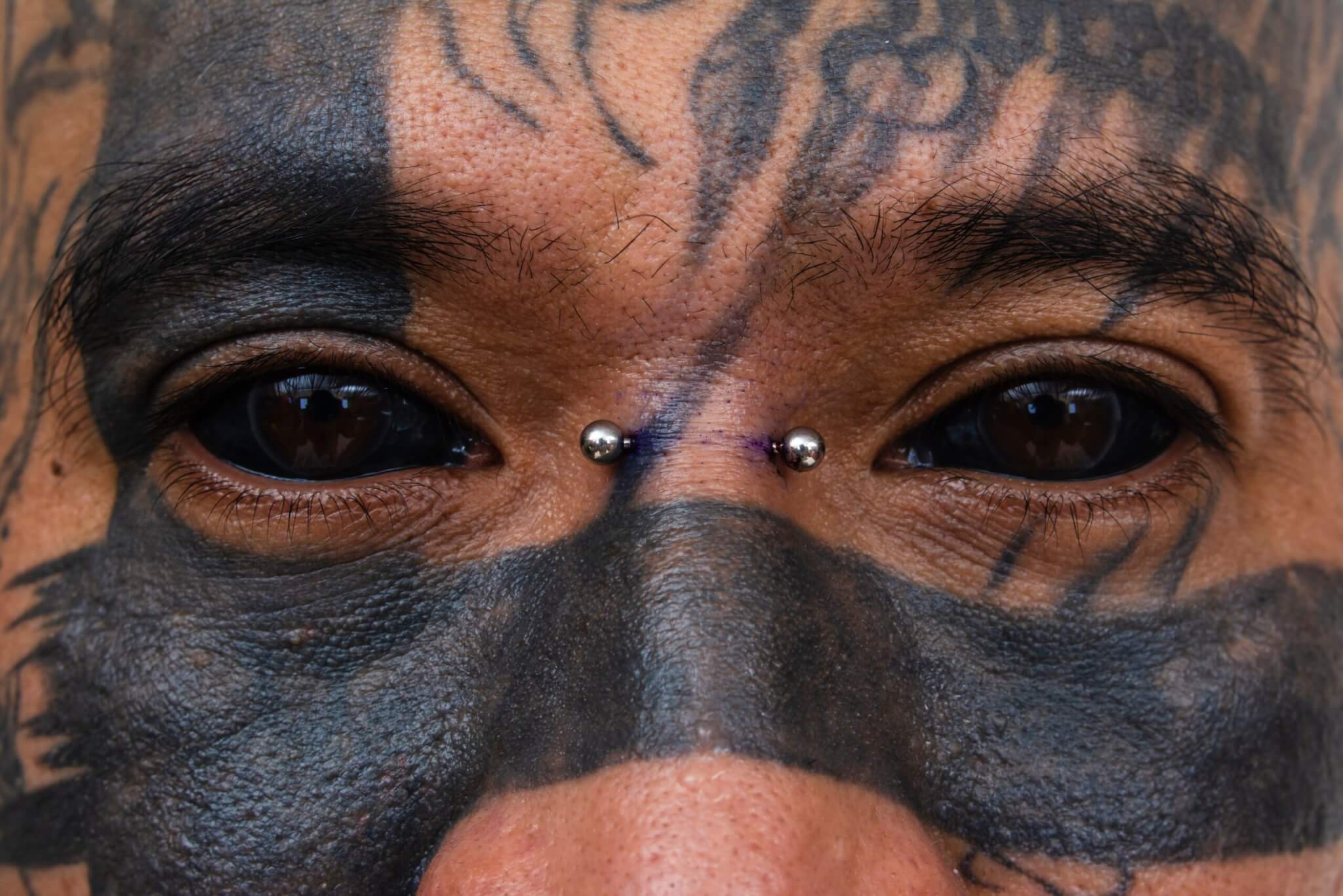
Ears have had their moment for years — curated stacks, conch hoops, triple helix. But 2026 is shifting attention to the center of the face. Septum, bridge, and labret piercings are showing up everywhere, and not as an afterthought to an ear collection — they're the main event.
At Tribal Rites Tattoo and Piercing, our Loveland studio has watched this shift happen in real time this year. Here's a breakdown of the facial piercing styles driving 2026, along with the anatomy, pain, and healing details you need before booking one.
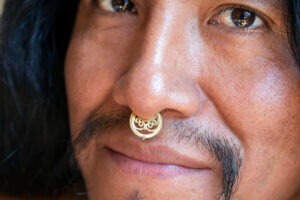
Septum piercing with high end gold jewelry
A few things are driving the shift toward the center of the face this year:
A piercing through the "sweet spot" of cartilage between the nostrils — not through thick cartilage itself, but the thin strip of skin just in front of it.
Because it targets the soft tissue rather than cartilage, septum piercings are often less painful than people expect — a brief, sharp pinch followed by watery eyes, but minimal lasting soreness.
Typically 6–8 weeks for initial healing, though full settling can take a few months.
Circular barbells and segment rings are standard for healing. Once healed, clients often switch to a septum clicker or horseshoe ring that can be flipped up for a low-profile look.
A surface piercing that sits horizontally across the bridge of the nose, between the eyes.
Since it's a surface piercing (not through cartilage or a fleshy fold), it carries more inherent risk of migration and rejection than most facial placements. Pain is generally moderate — sharp initial pinch, some pressure during healing.
8–10 weeks on average, though surface piercings can take longer and require closer attention to signs of irritation.
A straight barbell is standard. Because migration risk is higher here than other facial piercings, jewelry length and quality matter more — this is a placement where a skilled piercer's judgment really counts.
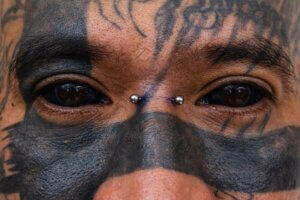
Bridge Piercing with a Titanium Barbell
Vertical labret sits through the lower lip, visible as two jewelry ends above and below the lip line. Medusa (philtrum) sits in the small indentation just above the upper lip.
Both target thin, fleshy tissue rather than bone or cartilage, which keeps pain in the moderate range — noticeable pressure, but generally brief.
6–10 weeks, with oral hygiene playing a bigger role here than in most other facial piercings since these placements sit close to the mouth.
Labret studs with flat backs are the standard starter jewelry. Once healed, clients often upgrade to small gemstone ends or subtle gold tops for a refined look.
Eyebrow piercings sit along the brow bone; anti-eyebrow sits just below the eye on the upper cheek. Both are surface piercings.
Pain is moderate — a quick, sharp sensation during the piercing itself, with some tenderness for the first few days.
6–8 weeks, though as a surface piercing, careful jewelry sizing is important to reduce pressure on the surrounding skin.
Curved barbells are standard, with titanium strongly recommended for reduced irritation risk during healing.
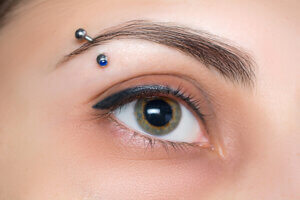
Eyebrow piercing with a customized curved barbell
Facial piercings in 2026 aren't being worn in isolation — they're being paired intentionally:
If you're already building out an ear collection, it's worth checking our ear curation trends roundup for ideas on how to balance ear and facial placements without either one competing for attention.
For any facial piercing, material choice affects healing more than almost any other factor. We recommend:
Facial piercings sit close to sensitive tissue, oral mucosa, or thin skin — which makes proper technique and aftercare especially important. The Association of Professional Piercers outlines clear standards for sterile equipment, appropriate starter jewelry, and piercer training that every reputable studio should meet.
The American Academy of Dermatology also recommends avoiding unnecessary touching, twisting, or early jewelry changes — advice that applies just as much to a septum or labret piercing as it does to an ear piercing. Our full Piercing Aftercare page walks through the exact cleaning routine we recommend for every facial placement.
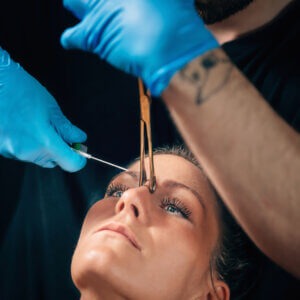
Bridge piercing in progress
Facial piercings require more precision than most placements — thinner tissue, closer proximity to nerves, and higher visibility if something isn't sized or placed correctly. Our Loveland piercers walk every client through placement, jewelry, and healing expectations before the needle comes out, so there are no surprises after you leave the chair. You can also review our full Piercing FAQ and About Our Piercing page for more on how we approach every session.
Septum piercings are frequently reported as less painful than expected, since the needle passes through soft tissue rather than cartilage or bone.
Yes — septum jewelry (like a horseshoe ring) can typically be flipped up and tucked into the nostrils for a low-visibility look once healed.
As surface piercings, they do carry a higher risk of migration or rejection compared to placements through cartilage or fleshy tissue, which is why proper jewelry sizing and an experienced piercer matter even more here.
Whether you're drawn to a classic septum or want to build a fully centered facial look, our team is happy to talk through placement and jewelry before you commit. Book your facial piercing in Loveland or stop by the studio on Eisenhower Blvd to see our jewelry selection in person.