Studio Hours:
12-7 M-Th
11-8 Fri-Sat
11-7 Sun
11-8 Fri-Sat
11-7 Sun
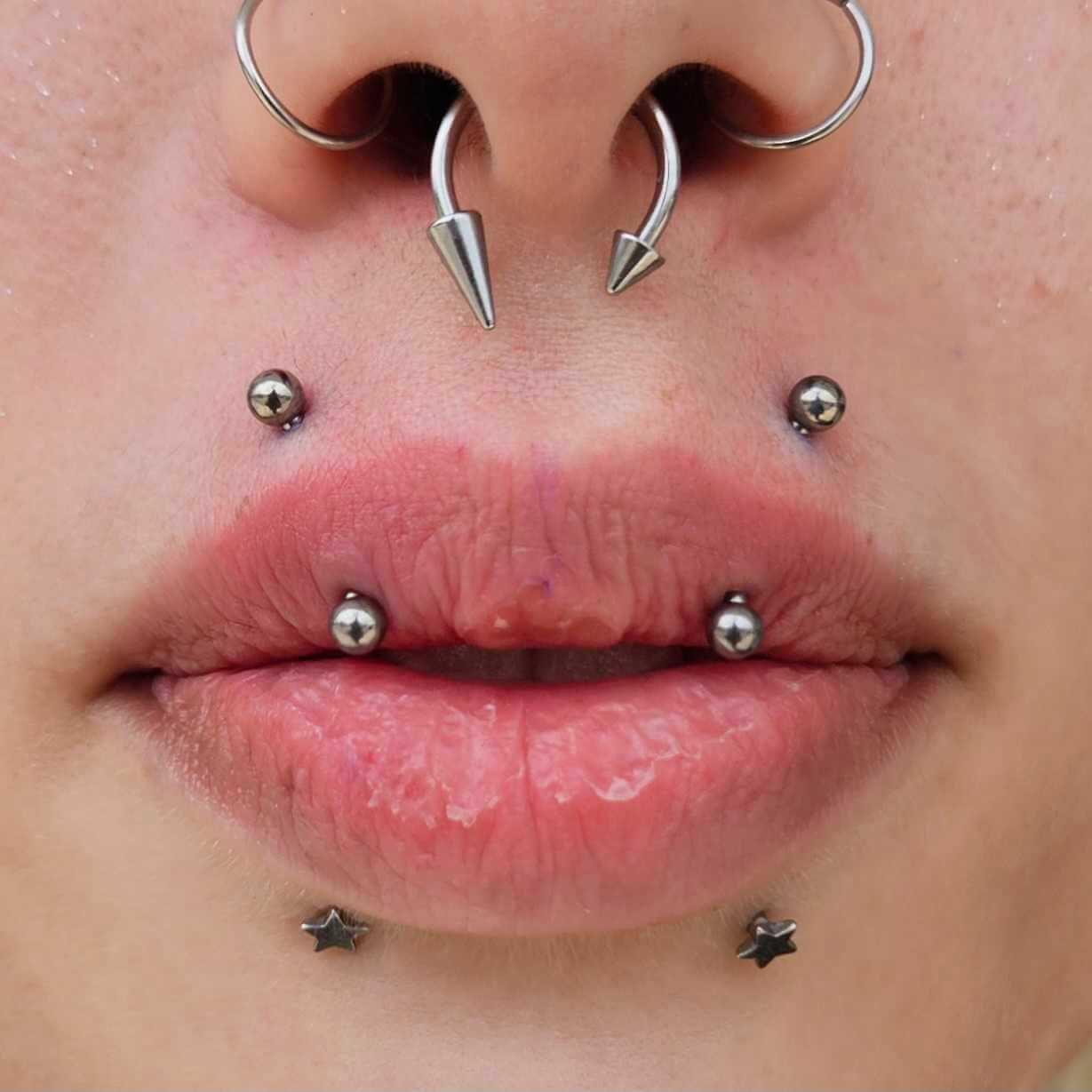
Most piercing irritation isn't caused by "bad healing" — it's caused by the wrong jewelry sitting in the wound the entire time. We see this constantly at our Loveland studio: clients come in frustrated about a bump or redness that never fully goes away, and nine times out of ten, the jewelry itself is the problem, not their aftercare routine.
Here's what actually causes piercing irritation, how jewelry material plays into it, and what you can do to prevent it from the very first day.
Snake Bites and Vertical Lip | Jane Reider | Tribal Rites
When a piercing stays red, itchy, or bumpy longer than it should, people usually assume they're not cleaning it enough — so they clean it more, which often makes things worse. In reality, the most common culprits are:
Jewelry material is, by far, the most overlooked factor — and it's the one within your control from day one.
The gold standard for new and healing piercings. Implant-grade titanium is biocompatible, nickel-free, and rarely causes reactions even in sensitive skin. If you're unsure what to start with, this is almost always the safest choice.
A great long-term option once a piercing is fully healed, but not recommended as starter jewelry — gold alloys can still contain trace nickel, and healing tissue is more reactive than settled skin.
Often marketed as "safe," but surgical steel can contain small amounts of nickel — enough to cause irritation in nickel-sensitive individuals, especially during initial healing.
The leading cause of irritation we see. Plating wears off with normal wear, exposing the base metal underneath — often a lower-grade alloy that reacts with skin. This is never appropriate for a healing piercing, and it's a common issue even in fully healed piercings that get "downgraded" to cheaper jewelry too soon.
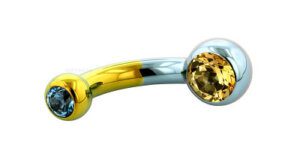
Titanium curved barbell from Tribal Rites
It's worth switching jewelry material if you notice:
If any of this sounds familiar, the fix is often simpler than people expect — swap to implant-grade titanium and give it time to calm down, rather than assuming something is medically wrong.
Even high-quality jewelry can cause irritation if it doesn't fit correctly:
This is exactly why we recommend having a professional piercer handle jewelry changes, especially in the first several months — proper sizing isn't something to guess at home.
Material and fit matter most, but daily habits still play a role:
Our full Piercing Aftercare guide walks through the complete daily routine we recommend for every fresh piercing, regardless of placement.
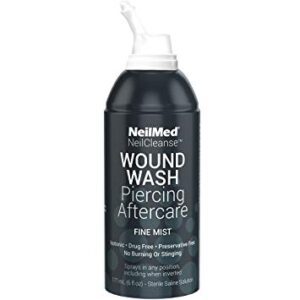
Saline wound wash available at Tribal Rites, Loveland
Mild redness or slight tenderness in the first few days is normal. It's worth checking in with our Loveland piercers if you notice:
A quick jewelry check often resolves the issue faster than switching cleaning products or waiting it out longer. Our Piercing FAQ covers more on when irritation is normal versus when it's worth a follow-up visit.
Once a piercing is fully healed, jewelry choice becomes more about style — but material quality still matters for long-term comfort. When upgrading, look for:
You can browse our About Our Jewelry page to see the exact materials and sourcing standards we hold every piece we sell to — the same standards we use for initial piercings.
The Association of Professional Piercers specifically recommends implant-grade materials for initial jewelry, citing lower rates of allergic reaction and complication compared to lower-grade alloys. The American Academy of Dermatology echoes this, noting that jewelry material is one of the most controllable factors in preventing prolonged irritation.
This is also why trends matter less than fundamentals — whatever style you're going for, whether it fits into 2026 piercing trends in Loveland or something entirely classic, the jewelry underneath needs to meet the same safety bar.
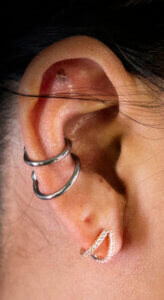
Conch Stack | Loveland, CO | Rob Chambers
Yes. This is often linked to a jewelry change — switching to a lower-quality or poorly fitted piece can trigger irritation even in a piercing that healed perfectly the first time.
It can work for some people, but implant-grade titanium is the safer starting point, especially for anyone with sensitive skin or a known metal allergy.
Irritation typically stays localized and improves once the cause (usually jewelry or over-cleaning) is addressed. Infection often involves spreading redness, thick discolored discharge, and increasing pain — if you're seeing those signs, it's worth having a professional take a look.
Whether you're dealing with a stubborn bump or just want to make sure you're set up for smooth healing from day one, our team is happy to check your jewelry and answer questions in person. Visit the Loveland studio or reach out before your next piercing to make sure you start with the right material the first time.